David Stephens
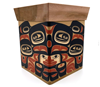
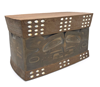
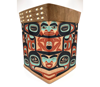
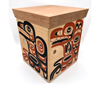
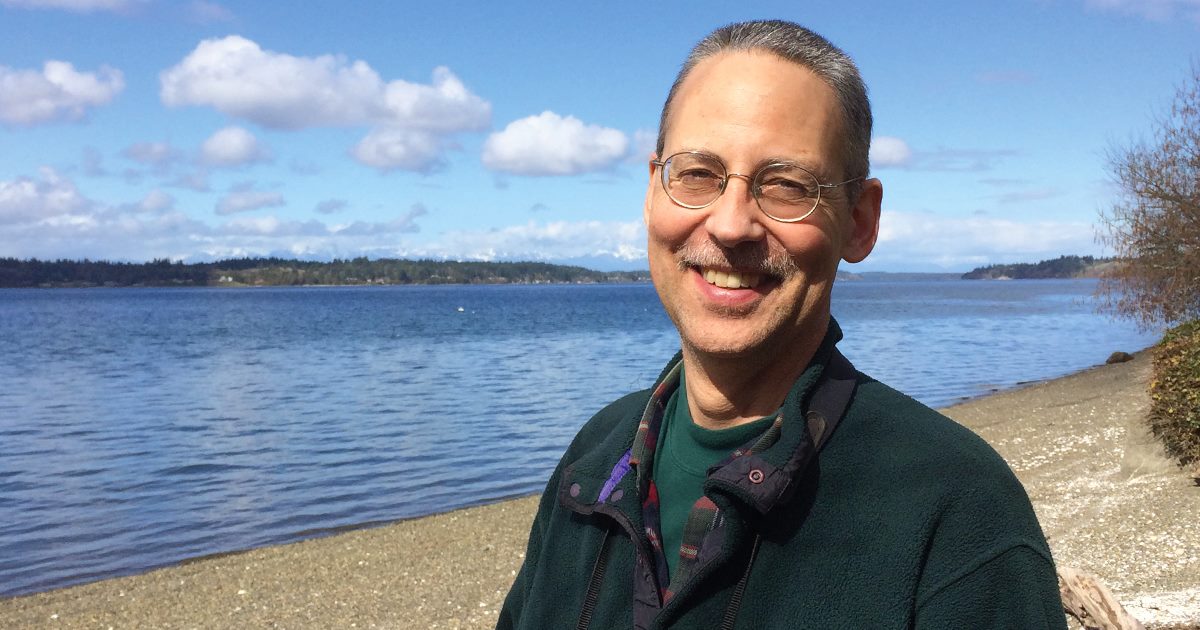 I have worked for several decades at parallel careers as a carver and as a ship-board naturalist. Since I travel most often on the Northwest Coast, the occupations reinforce each other. Bill Holm, the world’s leading authority on Native art of the Northwest Coast, declared that I was a master carver, and more recently encouraged a large group to inspect a bentwood chest of mine, because, he said, it was “perfect.”
I have been deeply interested in Native art and culture since the age of three. After graduating in biology from the College of William and Mary I moved to the Northwest and my passion for Native art was rekindled.
I began my education in 1983, taking Bill Holm’s art history classes at the University of Washington, followed by hands-on classes with Duane Pasco, from whom I learned enough to more-or-less teach myself the rest. In 1985 I began an apprenticeship in Kwakwaka’wakw dance with Nakwakdakw chief Henry Seaweed, grandson of the seminal artist Willie Seaweed.
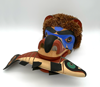
I became a professional artist in 1985 and since have made scores of bentwood boxes and masks, as well as bowls, rattles, drums, and totem poles. I have become something of a specialist in sheep horn bowls and ladles, and have made more of them than anyone in modern history. And my foray into Chilkat weaving was widely admired.
In recent years I have spent much time with Bill Holm, helping to build a Kwakwaka’wakw bighouse with four carved houseposts, and huge painted screens at the front and back of the house. Time spent with Mr. Holm was a deep honor and was of inestimable value. I also helped master canoe carver Steve Brown make a 35 foot cedar canoe. In the last year I have begun carving pieces for the Jamestown S’Klallam Tribe.
I am deeply in love with the old tradition of art on the Northwest Coast, in which there is a wide range of creative possibility. I enjoy innovation, but within the bounds of the thought that “I’ve never seen anything like this before, but if I look long enough in museums, I probably will.”
I have been deeply interested in Native art and culture since the age of three. After graduating in biology from the College of William and Mary I moved to the Northwest and my passion for Native art was rekindled.
I began my education in 1983, taking Bill Holm’s art history classes at the University of Washington, followed by hands-on classes with Duane Pasco, from whom I learned enough to more-or-less teach myself the rest. In 1985 I began an apprenticeship in Kwakwaka’wakw dance with Nakwakdakw chief Henry Seaweed, grandson of the seminal artist Willie Seaweed.
I became a professional artist in 1985 and since have made scores of bentwood boxes and masks, as well as bowls, rattles, drums, and totem poles. I have become something of a specialist in sheep horn bowls and ladles, and have made more of them than anyone in modern history. And my foray into Chilkat weaving was widely admired.
In recent years I have spent much time with Bill Holm, helping to build a Kwakwaka’wakw bighouse with four carved houseposts, and huge painted screens at the front and back of the house. Time spent with Mr. Holm was a deep honor and was of inestimable value. I also helped master canoe carver Steve Brown make a 35 foot cedar canoe. In the last year I have begun carving pieces for the Jamestown S’Klallam Tribe.
I am deeply in love with the old tradition of art on the Northwest Coast, in which there is a wide range of creative possibility. I enjoy innovation, but within the bounds of the thought that “I’ve never seen anything like this before, but if I look long enough in museums, I probably will.”
Sign up to receive an email when we get new work from David Stephens